Fluorocarbon Fishing Line – Control as a Main Line
The most popular products in Fluorocarbon as a main line: sinking, abrasion-resistant and discreet – for more control at the lure and reserve in the fight. in our shop


All 10 articles in Fluorocarbon as a main line: sinking, abrasion-resistant and discreet – for more control at the lure and reserve in the fight. at a glance
The more demanding the spot and your lure presentation become, the more the link between you and your lure matters. You want to feel what is happening down below – and to trust that your line plays along when things get tight around rocks and timber. This is exactly where fluorocarbon fishing line as a main line shows its strengths: sinking, abrasion-resistant and discreet, for more control at the lure and reserve in the fight.
Fluorocarbon, Nylon or Braid – Which Main Line Suits You?
Fluorocarbon sits between nylon and braid: it sinks, it is noticeably more abrasion-resistant than soft nylon, and it keeps a perceptible residual stretch as a buffer in the fight – unlike the virtually stretch-free braid. No material is best at everything. The table shows you where fluorocarbon comes out ahead and where another line is the smarter choice.
| Property | Fluorocarbon | Nylon | Braid |
|---|---|---|---|
| Stealth under water | high | medium | low |
| Abrasion resistance | high | medium | low |
| Sensitivity under tension | medium | low | high |
| Buffer in the fight (stretch) | medium | high | low |
| Sink behaviour | sinks | slow | tends to float |
| Suppleness / memory | stiffer | soft | very soft |
The actual figures vary considerably between individual lines – the table shows the tendency, not the last percent. What matters is the pattern: fluorocarbon combines properties that are otherwise split across two separate lines.
Fluorocarbon: Perfect When It Counts
Fluorocarbon is denser than water and sinks. The line bow between rod tip and lure is smaller – you stand in more direct contact with the lure, feel every bit of bottom contact and work twitchbaits more precisely, while crankbaits reach a little more depth. On top of that, fluorocarbon runs more quietly through the water than a braid and spooks wary fish in clear water less.
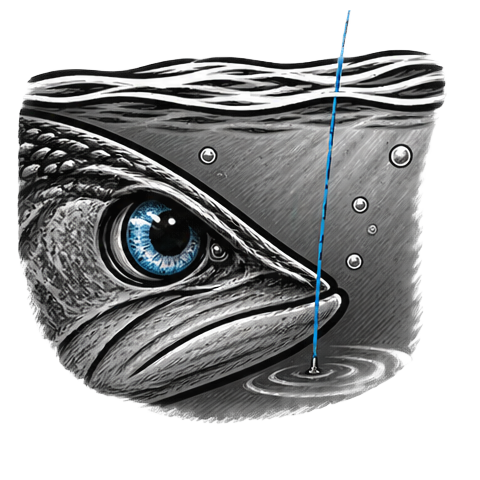
Stealth
barely visible in clear water
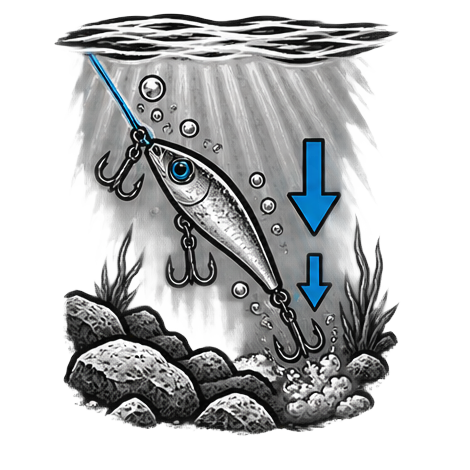
Lure control
sinks and keeps contact with the lure

Abrasion reserve
abrasion-resistant on rock and timber
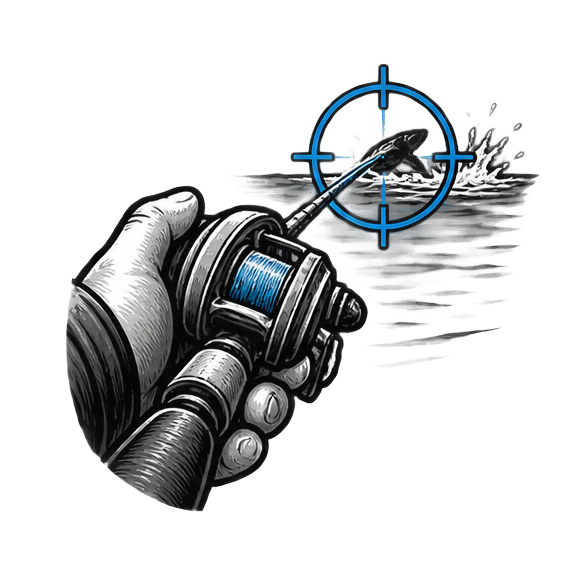
Direct contact
transmits every tap instantly
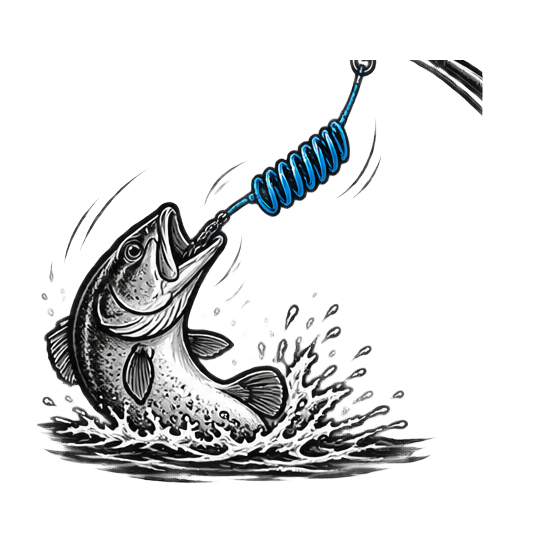
Fight reserve
residual stretch as a buffer in the fight
Fluorocarbon on the Baitcaster – Reaching Your Target Without Backlashes
Fluorocarbon is a touch stiffer than nylon and braid – on the baitcaster you will want to account for that, otherwise the line lays loosely onto the spool and a backlash is bound to happen. The approach is simple: set the brake a little firmer, start with heavier lures and work your way in gradually. After a few casts you have the feel – and enjoy the benefits without a connection knot, because you are running fluorocarbon throughout anyway. Important with every manufacturer: compare the diameter, not the stated breaking strain, because the figures vary from brand to brand.
Which Fluorocarbon Strength Suits Your Method?
The right strength follows your method, lure weight and snag risk – not the target fish alone. The table gives you reliable orientation values from our range. In snag-rich waters it pays to go one class stronger: that gives you an abrasion reserve and room to free a snag by hand instead of losing the lure.
| Application | Typical lures | Diameter |
|---|---|---|
| Ultralight & finesse | light spoons, nano jigs, fine softbaits up to ~5 g |
0.12–0.20 mm |
| Perch & trout spinning | minnows, small cranks, drop shot ~5–10 g |
0.20–0.26 mm |
| Zander on the bottom | softbait on the jig, rigs ~10–21 g |
0.26–0.33 mm |
| Structure & heavy lures | large cranks, swimbaits ~21 g+ |
0.33–0.41 mm |
| Big baits / long distance | jerkbaits, large swimbaits heavier lures |
from 0.40 mm |
Note: As a main line, fluorocarbon does not replace a bite-proof leader when pike are around – titanium is the safe choice for that. More on this on the Leader page.
Looking for Fluorocarbon as a Leader?
Looking for fluorocarbon specifically as a leader? Then other criteria matter, such as leader length, target fish and diameter. You will find the right selection and everything about choosing the correct material on the Leader page.
Control at the Lure, Security in the Fight
Fluorocarbon as a main line is not an end in itself, but a tool for anglers who want to steer their presentation deliberately: controlled lure guidance through the sinking behaviour, an abrasion-resistant reserve at demanding spots, a discreet connection in clear water. What remains decisive is a clean match to reel, lure and technique – then you focus on the bite instead of on your line.